THE BLOG: let's talk gardening
|
JUNE
17 2013 |
Summer in the 757! Gardening To-DosWith the first official day of summer arriving this week, June 21st to be exact... we've listed a few sizzlin' summer tips for gardening in the 757. From watering to lawn care, here's what you should be doing now to keep your garden going through the summer. Remember if you need help, our three year-round locations are here to answer any questions.
|
|
JUNE
14 2013 |
Make Dad's Day with Japanese Maples!Prized for its beauty, the Japanese maple is amazingly hearty and versatile and is one tree every dad should have in his landscape. There are hundreds of varieties of Japanese maples from the cascading dwarf or semi dwarf shrubs to the 30-foot version of this stately tree. With and endless assortment of leaf and color options, there’s truly a Japanese Maple for every taste and space. Check out some of our favorites and many more in stores... and many more and help make dad’s day ‘tree’mendous! BIHOU: a small, upright deciduous tree with tiny yellow-green leaves. Fall color is yellow to orange. Bark on twigs and branches turns a vivid coral yellow with an orange overcast in winter. The Japanese name means "beautiful mountain range." Prefers sun/partial shade in well-drained soil. 7' tall x 3' wide in 10 years. Hardy to -10 degrees. BLOODGOOD: A medium-growing, broad deciduous tree popular for its strong deep-red foliage which holds through summer. Fall color in vivid hues of crimson. Prefers sun/partial shade in well-drained soil. 12' tall x 8' wide in 10 years. Hardy to -20 degrees. MIKAWA YATSUBUSA: this is a very small Japanese maple that only grows to 4’-6’ in height and 4’ in width after 10 years. The growth structure is multi-branched. It bears leaves with long, narrow lobes which overlap similar leaves beneath, eventually forming a layered appearance like shingles on a roof. When the leaves first unfold in the spring they are a light yellow-green color. The thin-textured leaves become a medium green as they mature. The medium green leaf color turns golden-orange in the fall. The outer portion of the leaves have bright red tips. CRIMSON QUEEN: low-branching, dwarf tree with delicate weeping effect. Foliage holds its beautiful crimson color throughout summer before dropping in fall. Well-suited for use as a small lawn tree or on patios and entryways. EVER RED: dwarf variety with delicate weeping effect. Foliage holds beautiful deep red color throughout the summer before dropping leaves in late fall. Well-suited for use as a small lawn tree or for use on patios and entryways. SHAINA: a slow-growing, compact, upright deciduous tree, originating as a mutation off of Acer p. 'Bloodgood'. In spring, small leaves emerge in bright red clumps which darken to deep-red in summer. Fall color is red to orange. Prefers sun/partial shade in well-drained soil. 3' tall x 2-3' wide in 10 years. Hardy to -10 degrees. |
|
JUNE
12 2013 |
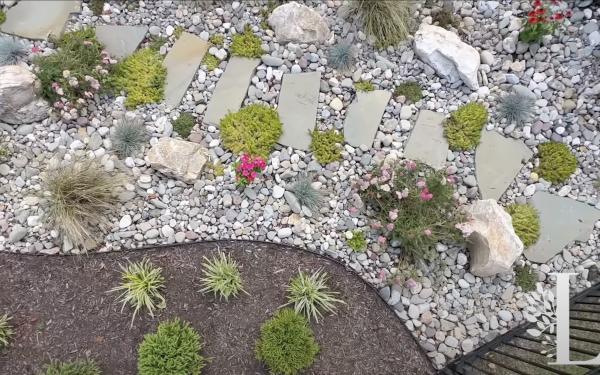
A Thrifty Perennial! Sea ThriftAlthough this tough evergreen perennial may not sea-worthy, it certainly is one garden-worthy plant! Sea Thrift, also known Ameria, can be found in the wild along beaches and in salt marsh areas... and of course at McDonald Garden Center's year-round locations.This low growing perennial boasts pink to reddish purple globed-shaped clusters on wiry stems a-top tufts of dark green grass-like evergreen foliage. Thrift is very easy to care for and blooms spring to early summer. Be sure to deadhead spent flowers in order to prolong flowering. We also recommend dividing your plant in early spring to rejuvenate. Like most perennials, Sea Thrift is quite versatile and is ideal in rock gardens, cottage gardens, as an edging, in containers and as a cut flower. Prefers full sun to semi-shade and well drained soil. Is both drought tolerant and deer resistant. Sea Thrift Armada Rose, from $7.99. |
|
JUNE
10 2013 |
Our Favorite PerennialsWho doesn’t love perennials? They grace your garden with beautiful blooms and foliage and year after year they pop back up adding color, structure and flowers to your garden. We took a poll of our perennial experts and put together a list of their favorite perennials. Check out what they had to say… Stephanie Phillips, McDonald Garden Center in Virginia Beach It’s hard to narrow it down to just one, so I’m giving you my top three! Purple Heart grows quickly and just one plant will fill a very large space. At the first frost and end of the season it will die back to the ground, so there’s no need to hide unsightly stems, and this allows plenty of room for you pansies. It has great color and can tolerate hot blazing sun. Gaura, especially the 'Whirling Butterflies' variety because it grows to a good size and it moves beautifully with the breeze. Black and Blue Salvia, like all salvias, attract hummingbirds like crazy. I like this salvia mostly because of it's intense blue color, which is pretty rare to find in the plant world. It gets taller than most salvias, so its great for the back of a flower bed. Dana Coulsting, McDonald Garden Center in Chesapeake My favorite perennial is Gaillardia Moxie. This flower is great because it loves the sun, doesn't require a lot of water and blooms for a long time! This particular gaillardia (sometimes known as blanket flower) is quite showy with very clear yellow frilly outer edges and a bright orange center. They look amazing in the garden or planted in containers. They grow about 18 – 24 inches tall and spread about the same so they definitely mix wonderfully with other flowers. As an extra bonus, this perennial not only attracts butterflies but is also deer resistant, which is a big plus! Taryn Ruesch, McDonald Garden Center in Hampton One of my top 10 favorite perennials of all time... the Pineapple Lily. These compliment every landscape with long, strappy leaves in a rich burgundy color. They grow 2-3 inches wide from the base, with the plant reaching a height of around 2-3 feet at maturity. Starting in July and continuing through to September, the Pineapple Lily produces tall racemes of creamy/purple star-shaped flowers densely packed around a thick stem. Each raceme can be around 6 inches in length and is held aloft for long periods of time, which makes it a great addition to a cut flower garden. Pineapple Lilies are well known as sun tolerant, but I also highly recommend them for part shade gardens as the sun will often leach some of the color out of the leaves. The Pineapple Lily grows best in a rich soil with a regular application of a good quality fertilizer. They will tolerate periods of drought once established, however water your lily regularly after first planting to help establish a strong root system. Andrea Osborne, McDonald Garden Center in Chesapeake My favorite perennial is Monarda, also known as Bee Balm. I love its unique whimsical flowers that bloom mid-to-late summer growing about of 2-4 feet high. It prefers a sunny spot with moist, but well-drained soil. Bee Balm attracts butterflies and bees and is also a hummingbird favorite. My Bee Balm is always the first stop for the hummingbirds in my yard. Its' height and movement in the breeze makes this perennial a beautiful addition to any sunny garden! |
|
JUNE
7 2013 |
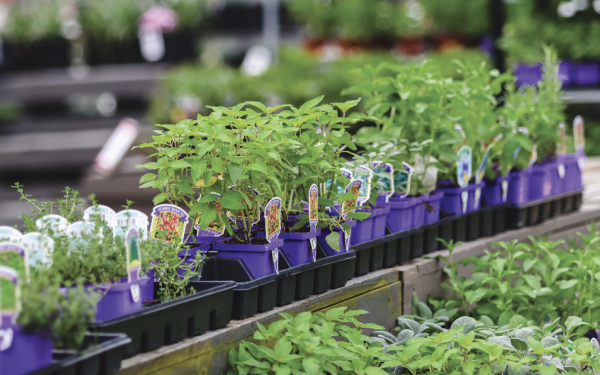
How to grow a pizza - a pizza garden that is!Have you ever thought about growing a pizza? You may not be able to grow a plant with pizzas ready to pluck from the vine, but you can grow a garden with pizza ingredients. A pizza garden can be any size or shape, and can easily be grown in containers on a sunny patio or deck, and it’s a fun project for the whole family. It’s also a great way to get children outdoors and motivated to plant and eat veggies. Here are a few staples to include in your pizza garden but remember, the possibilities are endless so be creative and plant your favorite toppings. Oregano- This aromatic herb is easy to grow and is one of the few herbs that is stronger when dried than when fresh. Italian Oregano, commonly called "the pizza herb," is a must have for any pizza sauce. Tomatoes- are a staple for both the pizza sauce and as a pizza topper! Select from a variety of your favorite tomatoes. Choose sweet tomatoes like Sweet and Neat or even add color with a yellow tomato like Lemon Boy. Peppers- choose from either sweet or hot peppers in a variety of colors for your pie. The classic bell pepper is a sweet pepper and is good way to add color. Try Better Belle or Red Beauty. Hot peppers can spice it up and we like Super Banana or Cayenne. Basil- This must have is grown for its wonderful sweet flavor. Use in the sauce or top it off with this delish herb. You can use any of the basils, but we really like Sweet Italian Basil. |
|
JUNE
6 2013 |
Let’s Talk Tomatoes!Growing your own tomatoes pays huge dividends and it's pretty easy. You can enjoy a homegrown harvest right from your own yard and tomatoes are an easy way to be a backyard farmer. And, best of all homegrown tomatoes taste better than store bought varieties. To get started, simply choose a few of your favorite tomato varieties or identify how you might want to use the tomatoes. We offer more than 30 different types, so there is surely a palette-pleasing tomato for you. Here's our favorite tomatoes: SWEET or CHERRY TOMATOES (great for salads and snacking)
EARLY-FRUITING TOMATOES (get tomatoes sooner)
SANDWICH TOMATOES (more beefy, less seeds)
SMALL SPACE TOMATOES (perfect for growing in containers)
HEIRLOOM TOMATOES (specialty varieties)
After you select the tomatoes that are best for you, you'll want to purchase a tomato cage to keep them upright. For best results and to ensure a bountiful harvest, a cage will support and ensure maximum growth. The cage will give your tomatoes something to grow through and keep the fruit off the ground and help support the stalks and keep them from bending and breaking. We especially love using colorful tomato cage to add a bit of whimsy to your garden. Finally, to make your tomato plants’ roots strong and your fruit plumper, we recommend using Espoma Tomato Tone Fertilizer. This organic fertilizer feeds your plants naturally and will not force rapid growth at the expense of blooms and tomato yield. We suggest applying Tomato-tone after plants are well established (10 - 14 days) and then twice a month during the growing season (May through August). TOMATO TIP: When planting tomatoes, we suggest adding lime to the soil to fortify the calcium in the soil thus helping to eliminate a common tomato problem, Blossom End Rot. |
|
JUNE
5 2013 |
Patio PerfectWhether you're dreaming up a brand new outdoor living space or you're thinking about revamping an existing one, planning ahead is essential to creating a patio that's both beautiful and functional. Here are some things to consider when planning a patio: Function - Decide whether your patio will be a gathering place or a getaway space. Are you going to throw a lot of parties outside, use it as a family space, or would you prefer a small, quiet, private patio just big enough for a couple of chairs and a table? Size - It's common to underestimate how big your patio should be. There’s no rule of thumb as to size, so it’s important to consider how many people will normally congregate in the space. Design proportionately to the house, making the patio as wide as the house and as long as the house's height or matching it to the size of an indoor room. Shape - Consider the shape; symmetrical to the house, asymmetrical (slightly askew to the house), or sweeping curves. Non-geometric patios provide visual interest even when you're not on the patio. Materials -Choose building materials to complement the color and style of your house. Our landscaping team recommends using Eagle Bay pavers to create patios as they are available in a wide range of colors, textures and shapes, which are very durable. Landscaping - Don’t forget to compliment your patio with the right landscaping. Before you begin, think about how you would like to incorporate your surroundings into your patio space. Greenery will soften hardscapes and add interest and dimension to your patio. If yard space is limited, simply use well-planned containers in a variety of shapes and sizes. Think about extras - A fireplace or fire pit will provide evening appeal; a water feature will add ambiance and block noise from a busy street. And a well-placed trellis will provide shade from the hot afternoon sun and provide privacy. Think of a patio as an extension of your house ~ have fun with the design and make it yours! If you would like help planning and installing your patio, our landscaping team can help. Check out our available Landscaping Services >> |
|
JUNE
3 2013 |
Portrait of a PepperStuffed, pickled, jelled, roasted, hot, mild, sweet, bell, ornamental, mini, long, red, green, yellow and orange - Peter Piper sure had his work cut out for him! Peppers come in a beautiful array of colors, shapes, sizes and tastes. This fruit is an excellent way to add flavor, color, and crunch to an otherwise bland dish. But peppers can also add a unique range of nutritional benefits to their expansive resume. Whether mild or spicy, peppers are nutrient packed and are one of the richest sources of vitamins A and C. Just a cup a day can provide more than 100% of your daily requirements. Select from a variety or pepper colors to get the biggest bang for your buck. All peppers, red, green or yellow, are excellent sources of vitamin C and vitamin A - two antioxidants that work together to neutralize free radicals. And, recent research indicates that both hot and sweet peppers contain substances that have been shown to increase the body's heat production and oxygen consumption for about 20 minutes after eating, which means your body is burning extra calories! So, whether you like the sweet or the heat, there’s a peppery for every pallet. We love these pepper varieties: PEPPER SWEETY- a petite, slightly tapered sweet pepper with thin crunchy walls. This space-saving plant reaches 10 to 24 inches high and can yield up 20 to 50, 4-inch long peppers that ripen from green to polished red. Ideal for growing in patio containers. Plant in full sun and well-drained soil. PEPPER BIG BERTHA- 7 inches long by 4 inches wide, this sweet pepper is the largest variety bell pepper available to date. Produces three to four-lobed, elongated fruits with thick walls and crunchy flesh. Matures dark green to bright red. Perfect for stuffing, salads, or anytime snack. Plant full sun. RED BEAUTY- juicy, sweet 3 to 4-inch pepper with extra thick walls and glossy green fruit that turns to vivid red when mature. A great addition to a summer cookout or add to any salad or dish for pop of color and flavor. These enjoy sunny, warm days, and well-drained, fertile soil. |
|
MAY
30 2013 |
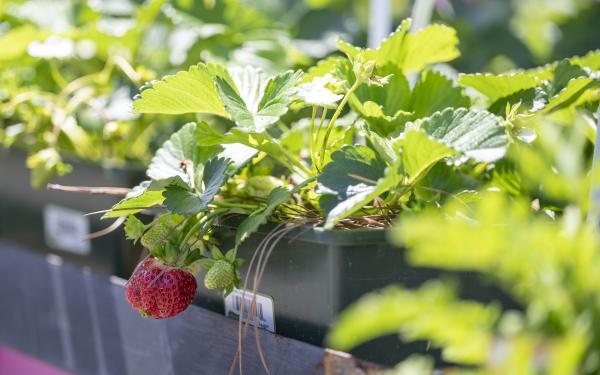
Pallet GardeningVertical gardens are all the rage and we are seeing them everywhere made from recycled pallets. From Pinterest to HGTV to all the decorating magazines including Better Homes and Gardens and Southern Living, pallet gardens are everywhere! They are an easy way to garden vertically and there's so many reasons to do it: 1) space limitations, pallet gardens do not take up a lot space; 2) pallet gardens add an architectural element to outdoor decor; 3) fruits & veggie plants lend themselves to growing vertically, like cucumbers or strawberries; 4) increase your growing space. No matter the reason, gardening vertically can be fun and rewarding.... and simply put, pallet gardens look fantastic! Many veggies and flowers are perfect for growing vertically, just be sure that what you choose has similar water requirements. RECOMMENDED PLANTS:
HERE'S HOW YOU DO IT: We’ve assembled some quick and easy instructions to get you started. We sell two sizes of pre-constructed pallets for easy growing. The pallet is made of untreated pine lined with Typar landscape fabric to keep the soil in place.
|
|
MAY
29 2013 |
Plant of the Week: Tropical HibiscusThese glorious plants with impressive large flowers are integral to the summertime landscape! In all the colors of the tropics including orange, peach, red, pink, yellow and coral, these brightly colored blossoms create a blaze of color all season long. Tropical Hibiscus, as the name implies, originated in tropical climates and do not tolerate freezing temperatures well. They will live year-round in warm climates where it seldom freezes. These are the Hibiscus that we associate with Hawaii and the kind that are strung into traditional Hawaiian leis. In Hampton Roads, they have a very long blooming season ~ lasting from spring through late fall. Each flower lasts just one day - but these beauties produce many flowers at such a fast rate, you'll enjoy a stunning show of color every day! Tropical Hibiscus are available as single and double blooming varieties. With plenty of warmth, water and fertilizer, you can be assured of a profusion of blooms and vigorous growth until winter sets in. As an added bonus, these beauties will also attract hummingbirds. Q. Do I have to water them every day? Q. How much sun? Q. What pairs well with tropical hibiscus? Q. What causes my buds to drop before the bloom opens? |
- 1 of 33
- ››